From Parliament to the Playhouse
From debating the future of the EU to a spot of political theatre (and an overpriced ice cream!), our 6.1 Politics A Level students took their learning beyond the classroom on a packed day out in London.
Read our student reports.
Exploring the World of Politics, from Westminster to Europe House
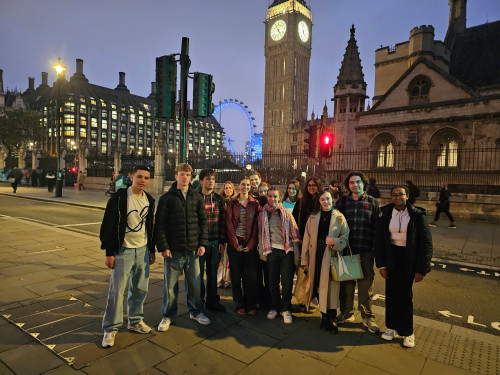
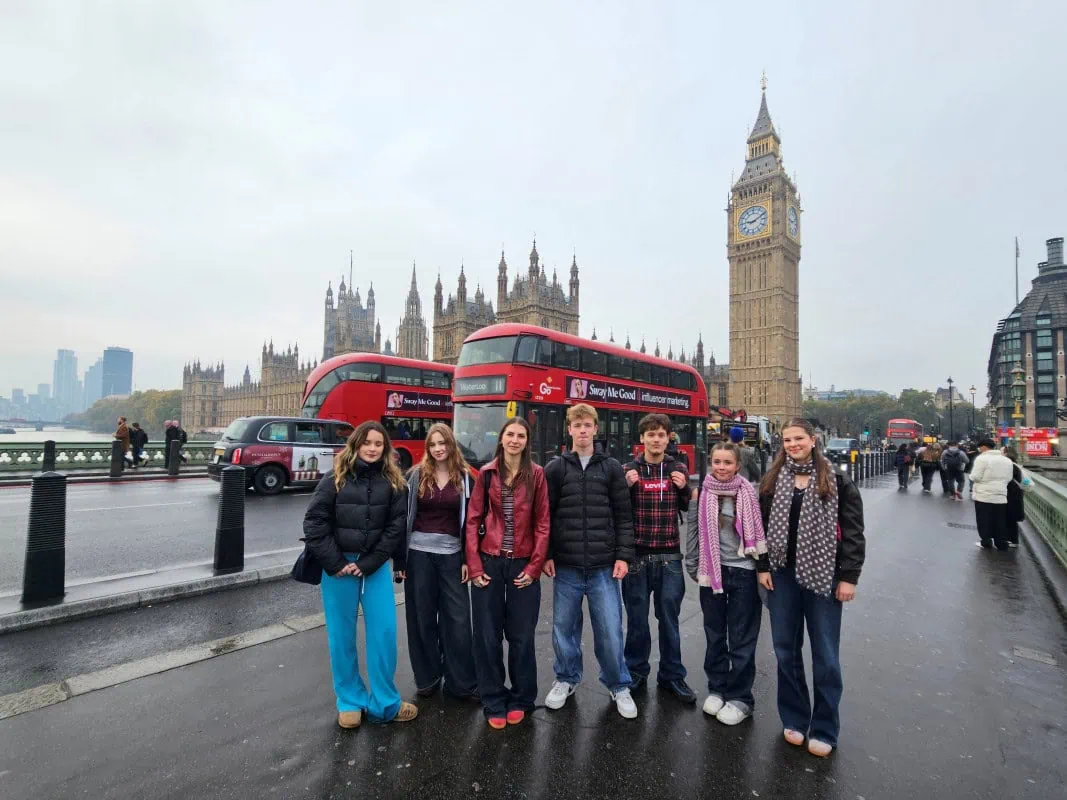
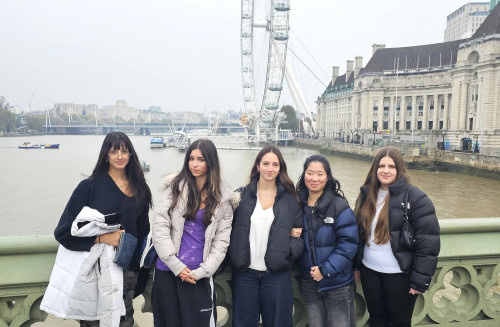
We met up at 8:40 at London Waterloo, and a few frantic registers later we were divided into our groups for the day. We set off first to the ‘muster point’, the memorial of Emmeline and Christabel Pankhurst outside of Parliament where we would reconvene at throughout the day, before heading to the visitor centre of Parliament to begin our tour.
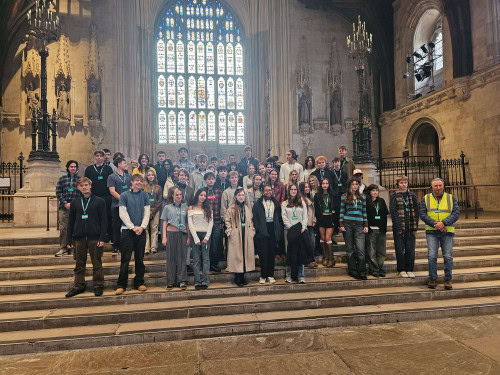
The tour itself was comprehensive, and we were fortunate enough to stand on the floors of both the Lords and the Commons (perhaps making it easier to visualise Parliament’s intense scrutiny that we have studied in our lessons). Next was a workshop that consisted of a Q&A with a Baroness as well as a mock election. Although some of these answers were quite diplomatic (for example, when asked about the role of the clergy in the Lords, she said that they were “good people”), this gave a great insight into the workings of the Lords. Our mock election was fiercely contended, with parties like Reshape UK, Refresh UK, and the Hello Yellow Party (to name a few) battling it out to form a government. However, victory ultimately went to the People’s Initiative. The first stage of our trip was overall a great success.
After a 2-hour lunch break, where we were given the freedom to explore Central London and its many cafes, we went onto Europe House, the official representation of the EU in the UK, for the seminar which would be the second stage of our trip. After a brief history of the EU and its founding we played a game of ‘EU bingo’ – everyone had been assigned a member for European Parliament on their lanyard and we had to go across the room and fill out the fun facts found on different lanyards on our bingo card.
This led into a segment regarding the future of the EU-UK relationship. Different issues like AI, climate change and trade and commerce were hung on the walls around the room and we had to stand by what we thought was the most pressing issue for discussion between the UK and EU, explaining our reasoning.
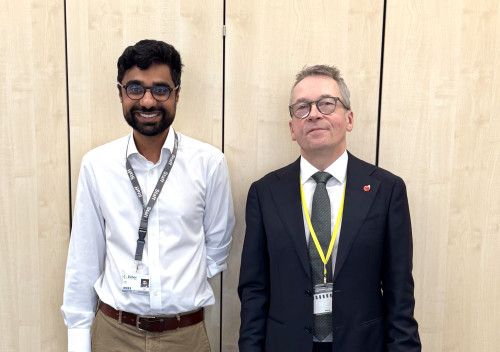
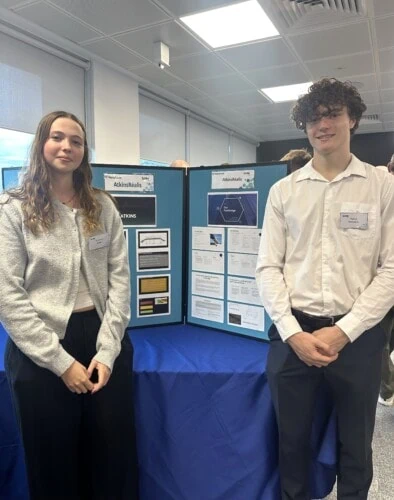
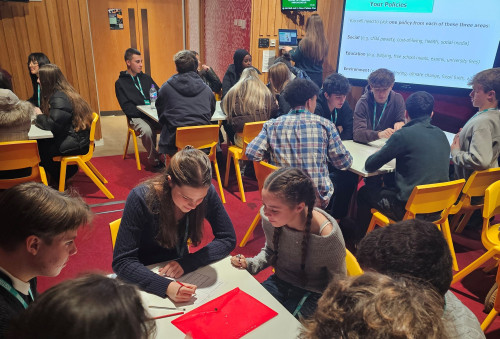
Finally, for the main part of the workshop, it was revealed our lanyards were not just for bingo, as we were told to sit in groups based on the political affiliation of the MEP on our lanyard. We were both assigned to the Patriots for Europe group, described as far right and Eurosceptic. It was interesting learning about how MEPs organise themselves into “groups” based on their political beliefs rather than sitting with other MEPs of their country, and it was also valuable to practice arguing for a side that you wouldn’t necessarily agree with, fitting well within the context of our politics essays. Each group proposed a resolution on behalf of the group they were representing, and our resolution in conjunction with the Europe for Sovereign Nations group (another group typically viewed as far right and Eurosceptic, perhaps where Reform or Restore UK MEPs would have joined had it not been for Brexit) was successfully passed after a vote.
All in all, it was a terrific day out, we learnt so much about the workings of Parliament and the EU and met many great people. It was unforgettable and certainly worth the early 8:40 start.
Written by 6.1 Politics A Level students James W. and Tom H.
A Dose of Keynesianism on a Friday night in the West End
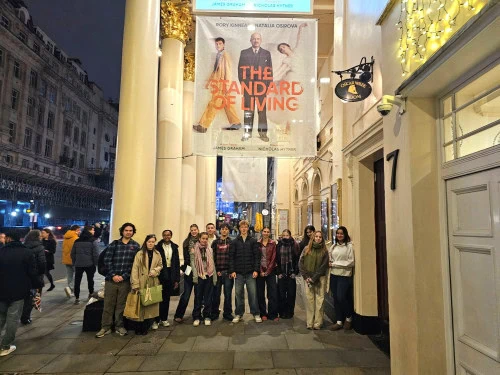
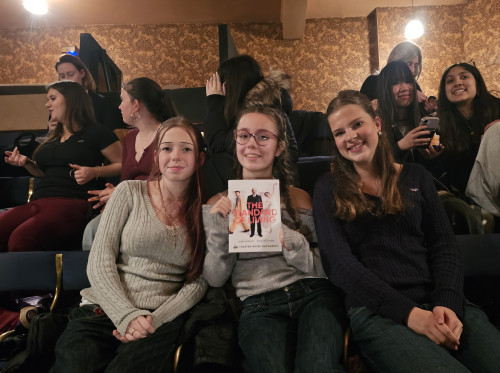
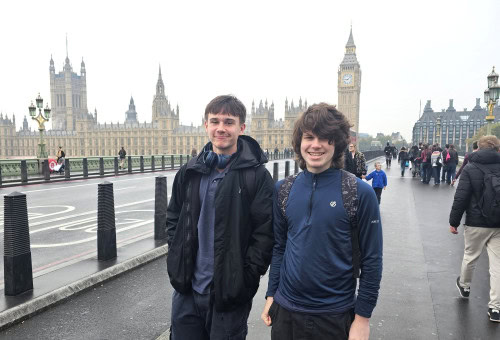
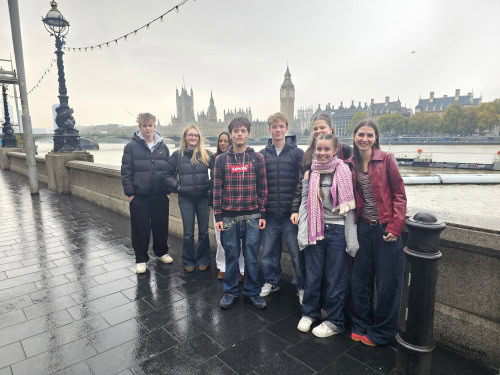
To conclude our Politics A Level trip to Parliament, 25 students and teachers took a theatre journey through the life of John Maynard Keynes in the play: ‘The Standard of Living’ at the Haymarket Theatre. The play explored his chaotic personal life along with his economic contributions to the modern world.
The first act focused almost solely on Keynes’ role in the underground queer community. There was a consensus amongst us that this act seemed to diverge from our expectations and our established knowledge of Keynes’ influence on the post-war world. This aspect added depth and context to the economist’s life, although some viewers found the layout of the first half cluttered due to the rapid scene changing.
Refreshed by an over-priced ice cream, we enjoyed the drastic tone shift of the second act into the more well-known, economic and government aspects. The play began to come into its own with the war demonstrating Keynes economic thoughts (otherwise known as Keynesianism’) as he fought against the more laissez-faire economists, arguing that the market should be controlled and that public services were essential for British society.
We all agreed the play was concluded well, as we left the theatre feeling like we had learned a lot and that the story was wrapped up effectively.
Collective rating of 3.5/5.
Written by 6.1 Politics A Level students Finn B, Xanti S and Cassia F.