Esher students tackle M25 bridge project
What does it take to design a new footbridge over the M25? For two of our 6.2 students, it was the challenge they took on this summer as part of a SATRO Research Work Placement.
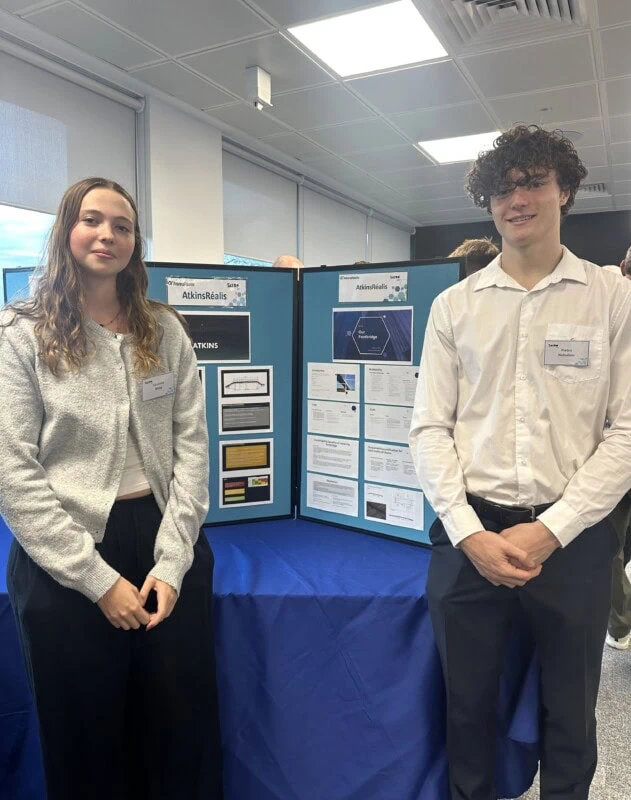
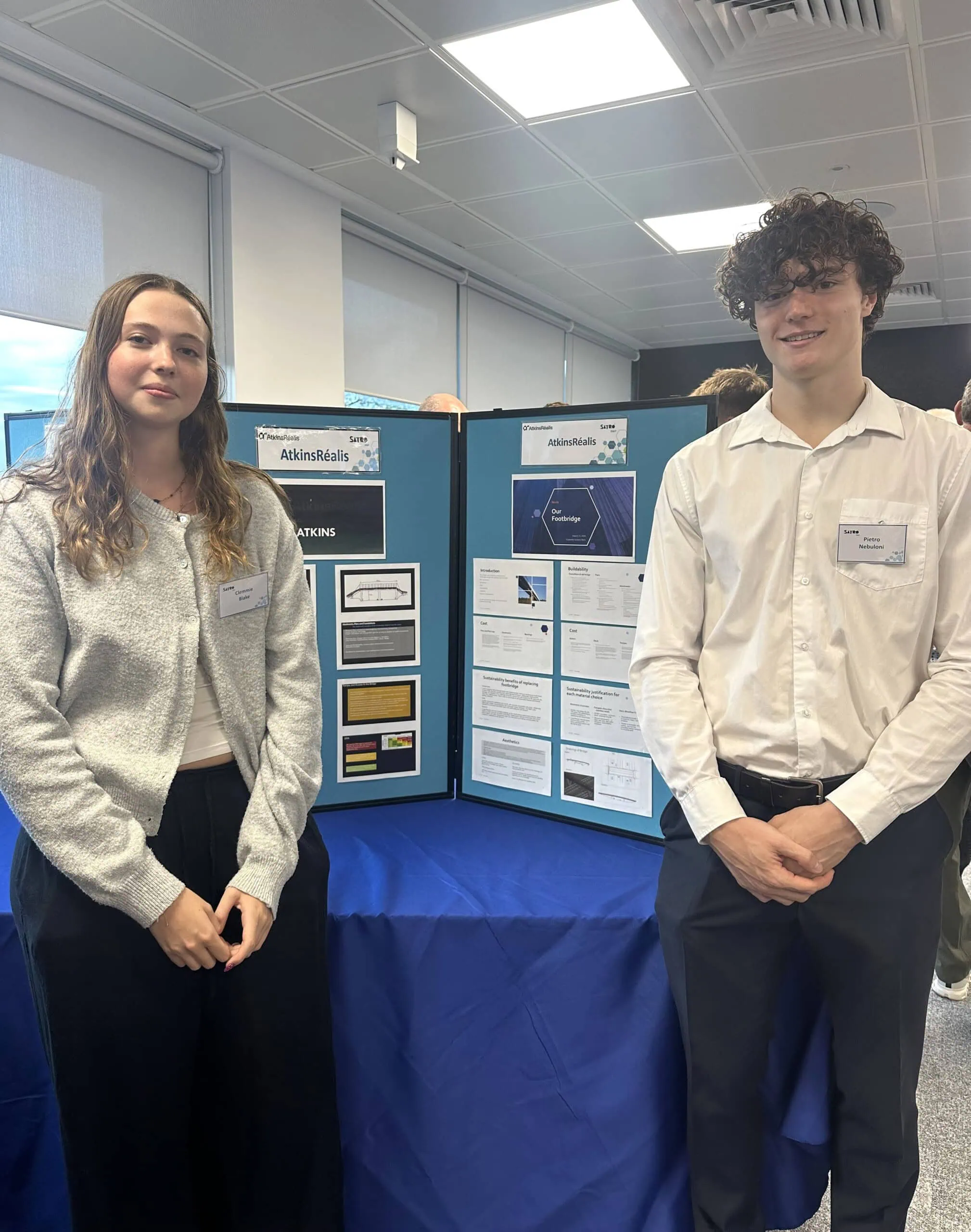
6.2 students Clemmie Blake and Pietro Nebuloni each secured a three-week placement with Epsom-based engineering company AtkinsRéalis, giving them the opportunity to put their knowledge and problem-solving skills into practice on a real-world engineering challenge.
Working in two teams of three, the students were tasked with designing a replacement for a substandard footbridge over the M25. Their brief went far beyond simply producing a design. They had to consider how the bridge would be constructed, its sustainability and the potential impact of the project on different stakeholders.
The teams then competed against each other to pitch their proposal, giving Clemmie and Pietro an insight into the challenges and decision-making involved in professional engineering projects. And they won!
The placement was part of Satro – SATRO Research Work Placements, which offers free two- to three-week placements during the summer holiday for Year 12 students. The programme connects students with local businesses across areas including Science, Technology, Engineering and Economics, providing valuable opportunities to gain hands-on experience and develop employability skills.
Clemmie said,
“This experience gave me an insight into engineering in practice and developed my skills in working in a team with new people and presenting a project. I would recommend this to anyone wanting to study engineering.”
As well as providing valuable experience for future careers, the placements can help students develop skills that are useful when applying to university.
Congratulations Clemmie and Pietro!
Applications for Summer 2027 placements open in spring and are available to current Year 12 students who are resident in Surrey.
Read Clemmie’s Report
 The application process was quick and easy. I had to fill out a short form to register my interest and then they requested me to send a video explaining why I would like to do SATRO’s RWP. They also wanted to hear about a new development I was interested in, so I talked about the new rear wing in formula 1. After this, they sent out the project titles that I could select my top 3 from. There was a wide range of projects from social sciences, engineering, computing, environmental and biosciences: including companies like Air Products, BAE systems, KBC global etc. They ranged from 2-4 weeks long and included either site visits or a fully virtual placement so there was a lot of flexibility. I got my second choice which was reimagining a safer future – footbridge replacement with the Epsom based company Atkins Realis.
For this project, it was a 3-week duration with a site visit at the start to get to know everyone. The engineering project involved designing a replacement for a substandard footbridge over the M25. We had to approach the project as engineers and consider not only the design but also the construction, sustainability and the impact on the stakeholders. There was 6 of us in total, and we were split into two groups to go head-to-head to design the better footbridge.
Our group designed a footbridge made up of weathered steel frame due to its low maintenance and we also kept the original piers and abutments to save on cost and to limit the time for construction. I had the responsibility of the structural features, ramps and the drawings of the bridge. This was quite challenging and involved a large amount of research to justify our decisions and researching about the technical side of building a bridge (like a civil engineer). Another part of our project was a designer’s risk assessment (DRA) which our mentor said is useful in any discipline in engineering and I hope to talk about it in my personal statement.
I spent about 3-4 hours for 3 weeks over the summer holidays on the project. This included regular calls with my team, independent research, and developing my drawings of the design through communication with my team. Our final presentation was a PowerPoint where we put all our research together. We presented this to our mentors at Atkins Realis and a few guest engineers on a team’s video call. Our mentor also gave us detailed feedback on our presentation and my group scored 84% (beating the other team!)