Overview
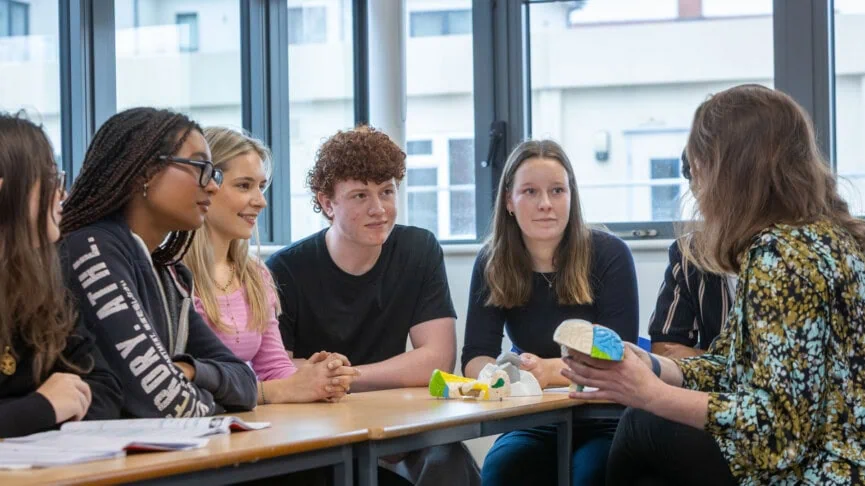
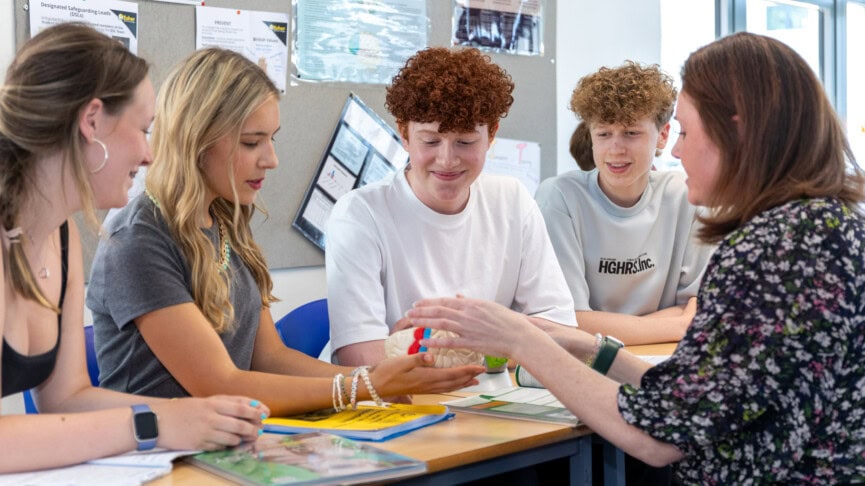
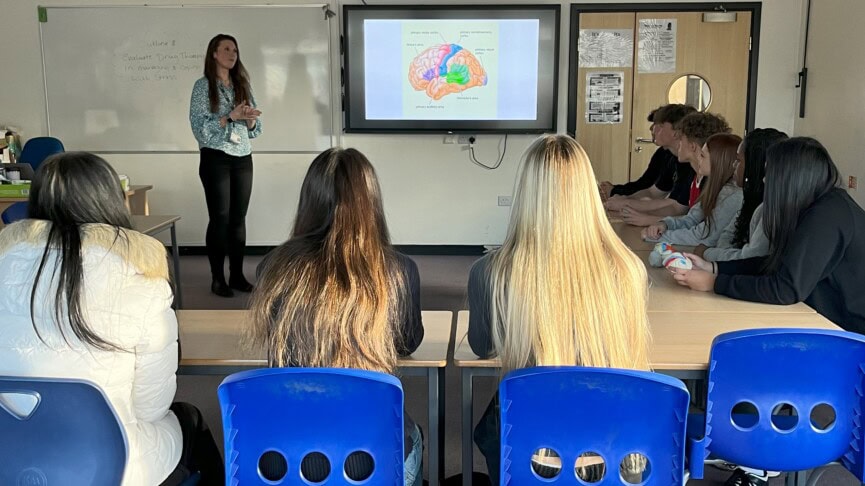

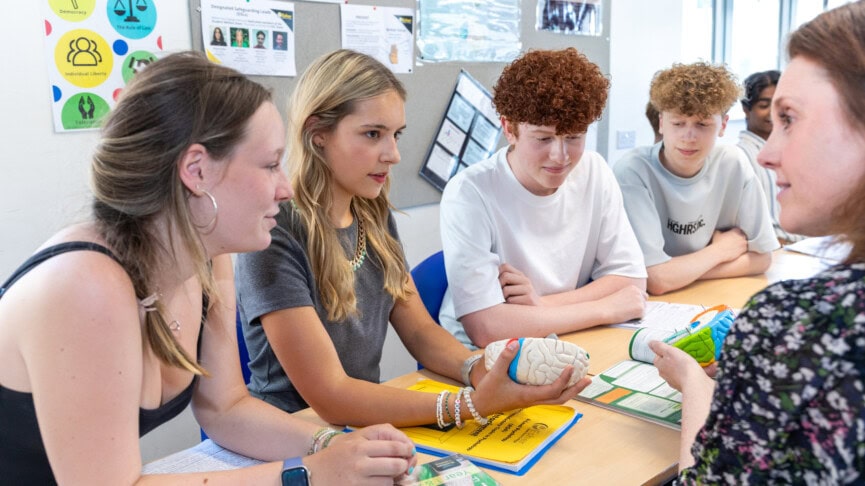

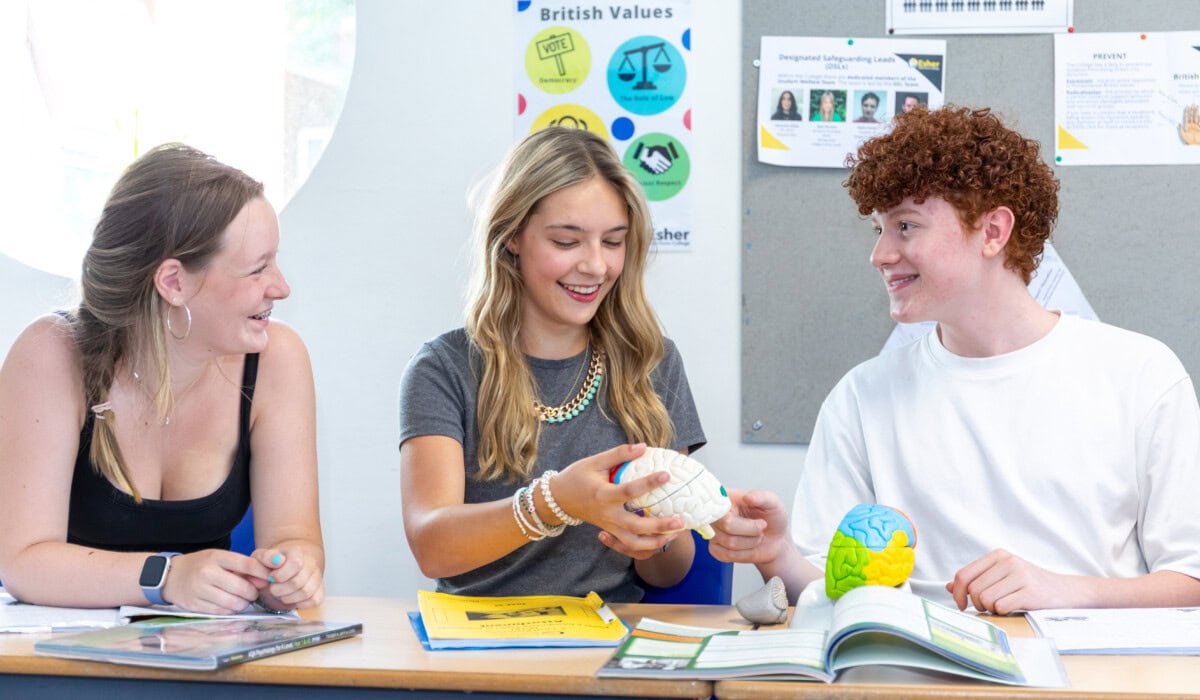
Psychology is the scientific study of human behaviour and the mind, arguably the most complex machine on earth. It seeks to explain what makes us who we are as individuals in terms of how we think and feel, as well as understanding what influences our actions.
Psychologists apply scientific methodology to the study of human behaviour. They formulate theories, test hypotheses through observation and experiment, and analyse the findings using statistical techniques that enable them to draw conclusions that can be used to provide insight into human behaviour.
On this course you will acquire knowledge and understanding of psychological concepts, theories, research studies and research methods in relation to various aspects of human behaviour.
Entry Requirements
In addition to the College Entry Requirements, to qualify for this course you will also need to achieve a minimum of:
- Grade 4 in GCSE Maths, English Language and a Grade 4-5 in Combined Science or a 5 in GCSE Biology.
Course Details
In the first year you will study five key topics:
- Approaches in Psychology – the learning, cognitive, biological, psychodynamic, and humanistic approaches to explaining behaviour.
- Psychopathology – definitions of abnormality and the nature of mental illness, including explanations and treatments for depression, OCD, and phobias.
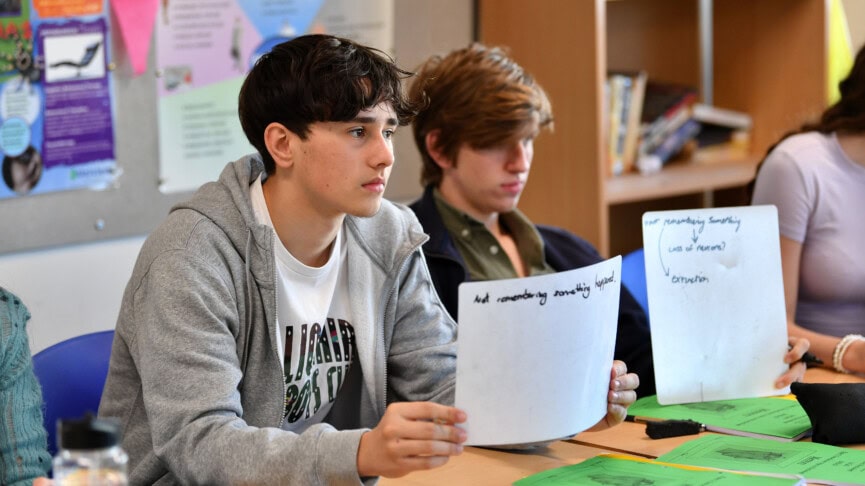
- Memory – the study of the nature of memory i.e. how information is processed and stored; explanations for forgetting and factors affecting the accuracy of eyewitness testimony.
- Attachment – the formation of an emotional bond with the primary caregiver, disruption of attachment and its influence on the development of later relationships.
- Social Influence – examining how people influence the behaviour of others: conformity, obedience, minority influence and independent behaviour.
- Research Methods (to investigate human behaviour) – including experimental and non-experimental methods, scientific processes (e.g. theory construction, hypothesis testing), ethics, data handling and analysis, inferential testing (e.g. the Sign test). Research Methods is integrated throughout the course.
In the second year you will explore a range of topics that aim to build on material taught in the first year of the course:
- Biopsychology – the nervous and endocrine systems, localisation of brain function, functional recovery of the brain after trauma, studying the brain (e.g. fMRI, EEGs) and biological rhythms.
- Gender – biological and psychological explanations for gender development and gender dysphoria.
- Stress – the role of stress in illness, sources of stress (e.g. workplace stressors, life changes), and managing stress.
- Addiction – risk factors, explanations and treatments for nicotine and gambling addiction.
- Issues and Debates – gender/culture bias in psychology, reductionism, nature vs. nurture, holism vs. reductionism, idiographic vs. nomothetic approaches to psychological investigation. This is a synoptic topic and requires you to provide examples of psychological research where the key issues and debates have arisen.
You will study Research Methods in greater depth and learn more complex inferential statistical techniques of analysis.
To succeed on this course, you need to enjoy learning scientific bodies of theories and writing essays.
Assessment
The course is assessed by three written exam papers at the end of the two-year course. Questions vary in style from multiple-choice to short answer questions and those requiring extended writing in the form of full essay responses. Some questions require application of knowledge to novel scenarios.
Overall, at least 10% of the marks in assessments for Psychology will require the use of mathematical skills.
At least 25–30% of the overall assessment will assess skills, knowledge and understanding in relation to Research Methods.
Exam board is AQA.
Subject Combinations
Psychology combines well with many other subjects. Many students combine it with another science subject such as Biology or Mathematics. Others combine it with Social Sciences and Humanities subjects, such as Sociology, History or Economics.
FAQs
What is the difference between Psychology and Sociology A Level?
Both subjects are interested in human behaviour but ask questions from different perspectives. For example, in thinking about aggressive behaviour, Psychology explores what makes individuals behave aggressively while Sociology might ask why violence has increased in society.
Psychology is a science, and unlike Sociology you will study explanations of behaviour based in Biology. A Level Psychology also has a strong emphasis on scientific research methods and statistical analysis of data.
What skills will I need and develop on this course?
Psychology is not usually available at GCSE, but the GCSE subjects that are closest to the ways in which you will need to work are Combined Science or Biology (where there are technical terms and theories to learn) and History (where there is an emphasis on essay writing).
You need to enjoy getting to grips with ideas and issues through reading, and you need to be good at organising ideas on paper in extended writing. You also need to be comfortable with scientific and mathematical approaches.
The course will develop your oral and written communication skills, such as your ability to construct a coherent argument, as well as your critical evaluation skills and your ability to analyse and interpret data. Psychology is an evidence-based subject, so you will learn how to use scientific research findings to support or refute theoretical ideas about human behaviour.
What extra support/enrichment activities are on offer?
At Esher, we offer subject tutorials to enable students to access 1:1 support from their teachers, and revision sessions to strengthen their understanding of the course content.
We offer a practical application of Psychology in our Counselling Skills course, available to students as a Progression Pathway in their second year at the College. This is a nationally recognised qualification for young people wishing to improve their skills as peer supporters.
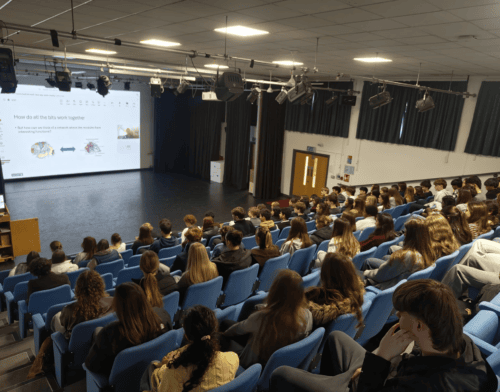
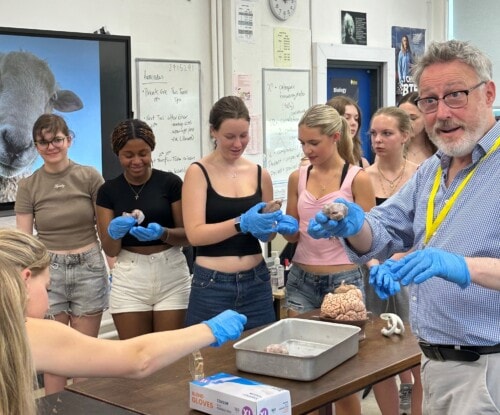
In the final week of your first year, the College holds its Wider Skills Week, which is dedicated to enrichment activities. The Psychology department offers day trips to the Freud Museum to learn more about psychoanalysis, and London Zoo to gain an insight into animal learning and intelligence. There is also Brain Day with Dr Guy Sutton, an interactive brain dissection that develops students’ knowledge of the neuropathology of traumatic brain injury and the role of the brain in schizophrenia. In addition, there is the option of a taster course in Counselling Skills.
We offer two courses in Psychology (Psychology in Film; Introduction to Forensic and Criminal Psychology) as part of the College’s Complementary Studies programme.
University Destinations
Psychology A Level is a highly respected qualification, with 90% of our students progressing onto University.
Here are some typical university destinations that our Psychology A Level students go on to. Click on a destination to see some examples of courses they have taken:

University of Sussex
Typical courses: Psychology with Neuroscience / Psychology (with a professional placement year) / Psychology with Criminology / Geography / Politics and International Relations /

The University of Nottingham
Typical courses: Psychology / Medicine / Industrial Economics with a Placement Year / Mathematics / Sport and Exercise Science / Philosophy and Psychology / Law / Architecture

Nottingham Trent University
Typical courses: Psychology with Criminology / Childhood (Psychology) / Product Design / International Business / Psychology / Business / Business Management and Marketing / Youth Justice
Loughborough University
Typical courses: Design (with placement year) / Industrial Design (with placement year) / Sport Management / Human Biology (with placement year) / History and International Relations (with placement year) / Psychology (with placement year) / Accounting and Financial Management (with placement year)

Bournemouth University
Typical courses: Games Design / Multimedia Journalism / Criminology with Law / Media Production / Product Design / Psychology / Photography / Marketing Communications with Advertising

University of Portsmouth
Typical courses: Sport and Exercise Science / Interior Architecture and Design / Sociology with Criminology / Business and Management / Psychology / Criminology and Forensic Studies / International Business

University of the West of England
Typical courses: Midwifery / Psychology / Sport Rehabilitation / Architecture and Planning / Psychology / Business Management and Marketing (with Foundation Year)

University of Surrey
Typical courses: Psychology / Nursing Studies (Registered Nurse Adult Nursing) / Biomedical Science BSc / Business Management (Business Analytics) / Sociology / Biological Sciences / Psychology with Foundation Year / Nursing Studies (Registered Nurse Children & Young People Nursing)

Oxford Brookes University
Typical courses: Psychology / Physiotherapy / Child Nursing / Nursing (Children’s) / Criminology / Interior Architecture

The University of York
Typical courses: Psychology / History/History of Art (Equal) / Law / Psychology / Economics