Overview
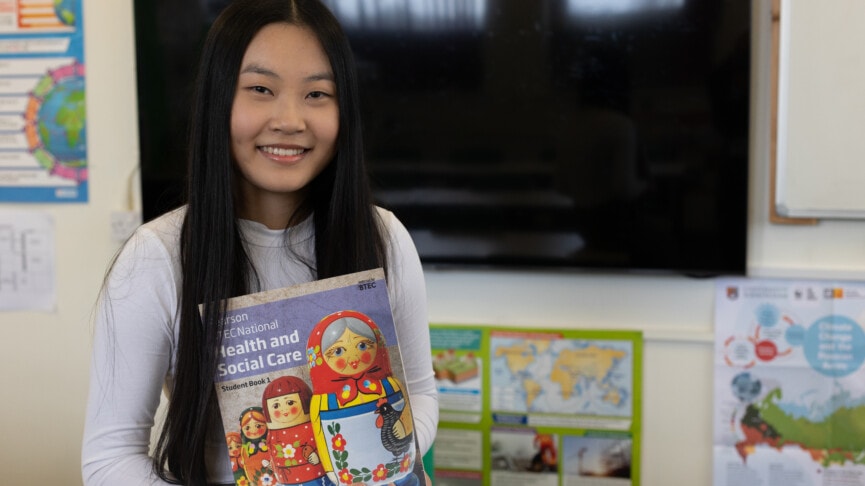

Health and Social Care BTEC National Diploma, equivalent to two A Levels
At Esher, we offer two Health and Social Care courses.
The single Health and Social Care AAQ qualification, equivalent to one A Level, and the National Diploma, equivalent to two A Levels, and therefore double the number of lessons, coursework and UCAS points.
Both courses offer a varied content and are aimed at providing students with the knowledge, understanding and skills relevant to careers in health care and social care.
Students who wish to pursue a career in the Early Years’ sector can also study this course as the content in the unit on “Human Lifespan Development” covers development in children. Visits, case studies and input from visiting speakers form an important part of the course, giving students an opportunity to understand what is being studied in relation to real care settings. This is a two-year course.
Entry Requirements
In addition to the College’s general entry requirements you will need to have a minimum of a Grade 4 in English Language GCSE. If you are looking towards Primary Teaching, Nursing or Midwifery, Grade 4 in Maths GCSE and Science GCSE are also important.
Equally important is that you need to be interested in and committed to working with people, and understanding and caring for them. A genuine interest in looking after people at critical and sometimes tricky stages of their lives is at the heart of these courses.
Course Details
The Diploma consists of eight units over the two-year course.
- Unit 1 ‘Human Lifespan Development’ which covers physical, intellectual, emotional and social development across the human lifespan, the factors affecting development, and the effects of aging. This unit gives you a knowledge base for working with people in every stage of their lives, from the cradle to the grave. (exam unit)
- Unit 5 ‘Meeting Individual Care and Support Needs’ which develops your understanding of the provision of support for people who have particular needs. It covers anti-discriminatory practices, ethical principles, communication approaches, and how professionals work in teams. (coursework unit)
- Unit 2 ‘Working in Health and Social Care’ (exam unit)
- Unit 14 ‘Physiological Disorders and their care’ (coursework unit0
- ‘Physiological Disorders and their care’, which enables you to develop an understanding of the causes, signs and symptoms, diagnosis and treatment of disorders, including care planning.
- ‘Enquiries into Current Research in Health and Social Care’ where you learn about research methods.
- ‘Principles of Safe Practice in Health and Social Care,’ which develops your understanding about the range of safety issues when caring for people who are dependent on others for their care.
- ‘Promoting Public Health’ which is learning about the models of health, and understanding the ways public health is promoted.
Assessment
The double National Diploma course consists of eight units studied over two years. Three units are exam assessed. The other five units are coursework based.
Subject Combinations
Health and Social Care is not a complete programme in itself and you will need to take an A Level or other vocational course alongside it.
Courses which are commonly taken alongside it and combine well in supporting it, include Sociology, Psychology, Biology, Geography, History, Physical Education and Human Biology.
University Destinations
The Health and Social Care Diploma is a recognised route to university.
Here are some typical University Destinations that our Health and Social Care students go on to. Click on a destination to see some examples of courses they have taken;

Careers
Students who have studied these courses can progress to university for a wide variety of courses including Occupational Therapy, Nursing, Midwifery, Primary Teaching, Early Childhood Studies and Social Work. Other students have gone straight into employment in a variety of fields related to the course – for example, going on to work as Nursery Assistants, Care Assistants or to join the Ambulance Service.
FAQs
Is it a good idea to take only vocational courses?
Taking a programme consisting predominantly of coursework-based courses is demanding in relation to the sheer volume of assignments and deadlines you would be managing, but it may be the right thing to do in particular circumstances.
However, including one or more A Level courses in your study programme can also help you to develop your skills for example in essay writing, which is helpful for progression to study at a higher level afterwards.
What extra support/enrichment activities are on offer?
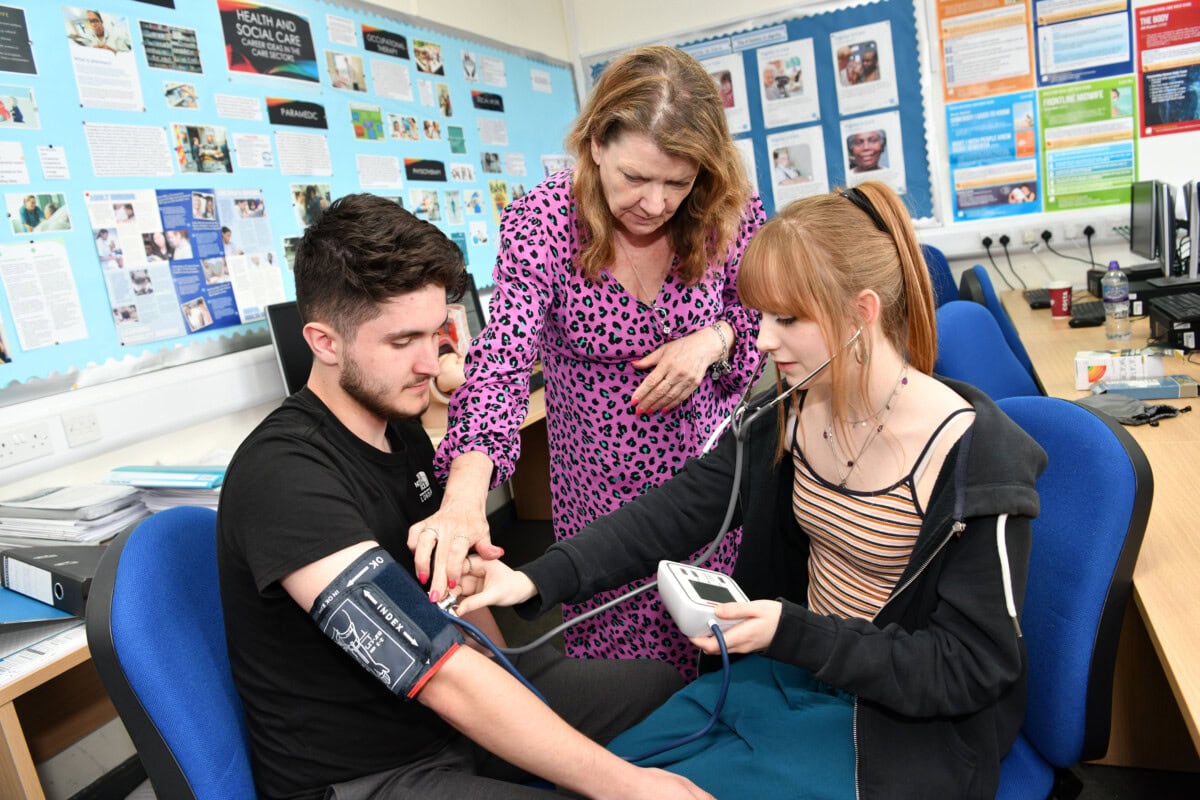
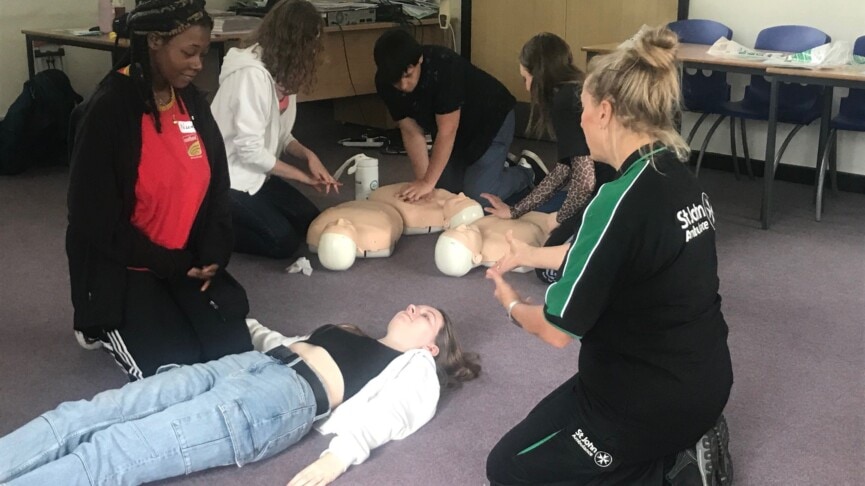
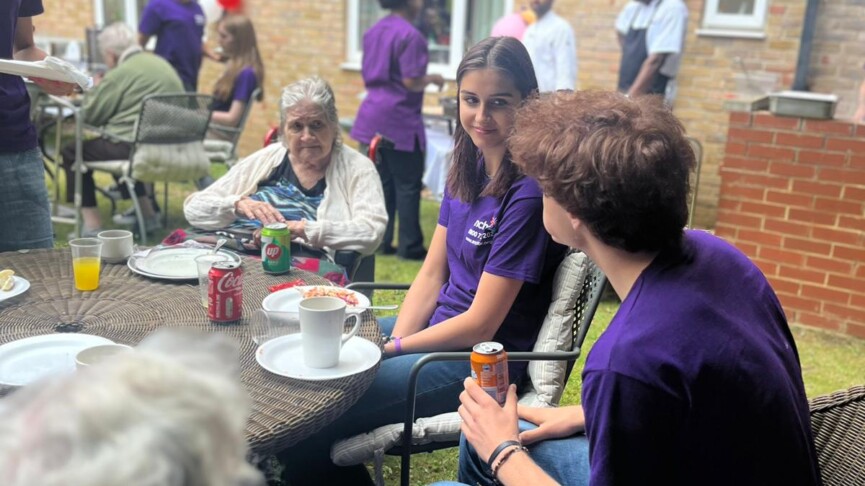
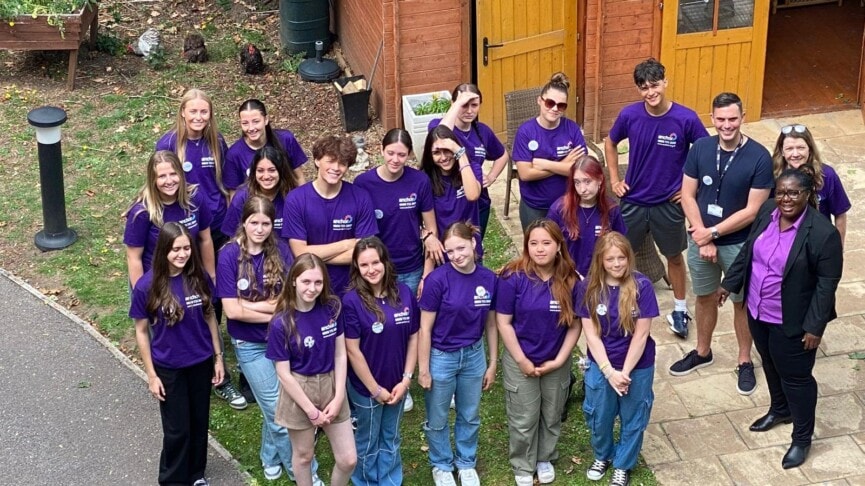
Many students on these courses take part in the College’s Community Volunteers or School Mentoring programmes. These involve assisting in a local nursery or school or day-centre on a weekly basis for two terms. There may also be opportunities for community work and work experience with local organisations. As part of the unit on Promoting Public Health, Diploma students will also work with health professionals in planning and implementing a health campaign for the College’s Health Fair for students.
There may also be an opportunity to take part in simulated Clinical Skills sessions at Kingston University. In addition, the department provides support in terms of guidance on careers, including support with personal statements and mock interviews.
How many lessons do I have a week?
For the single, AAQ course you will receive four lesson a week. Students taking the double Diploma BTEC will have eight lessons a week.