Overview
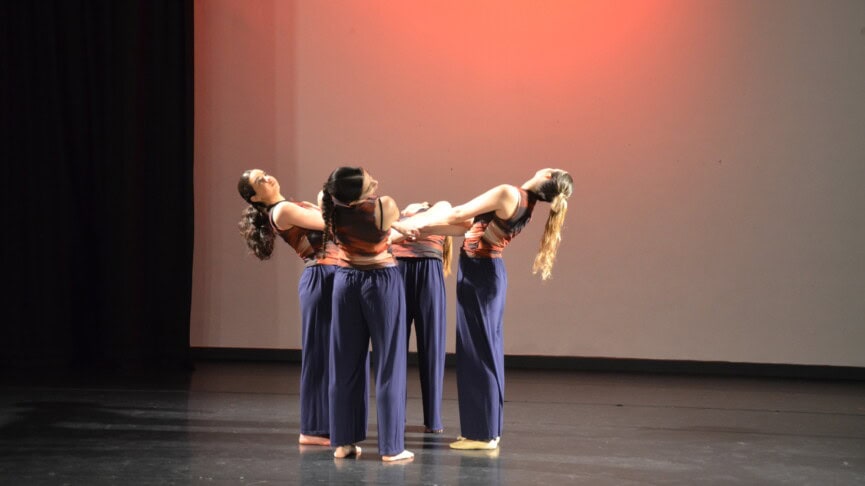
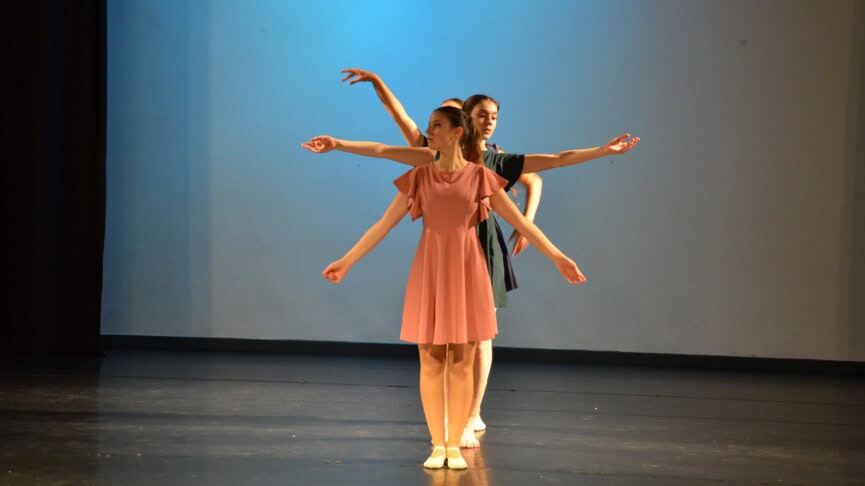
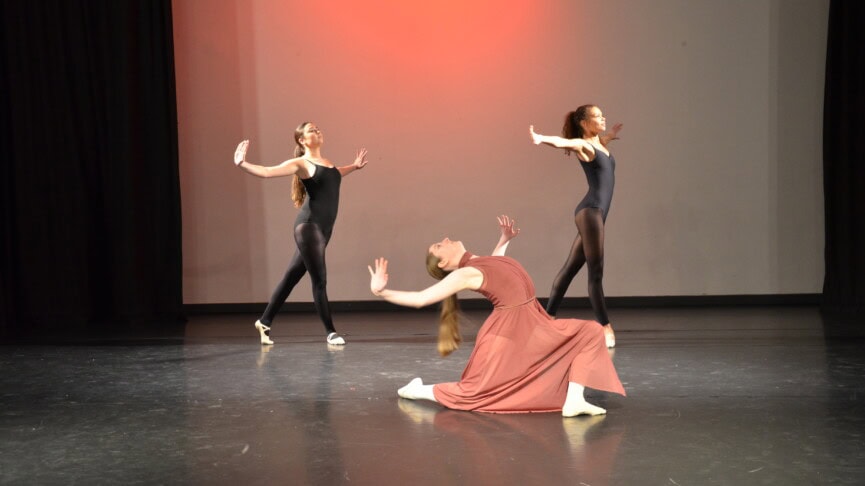
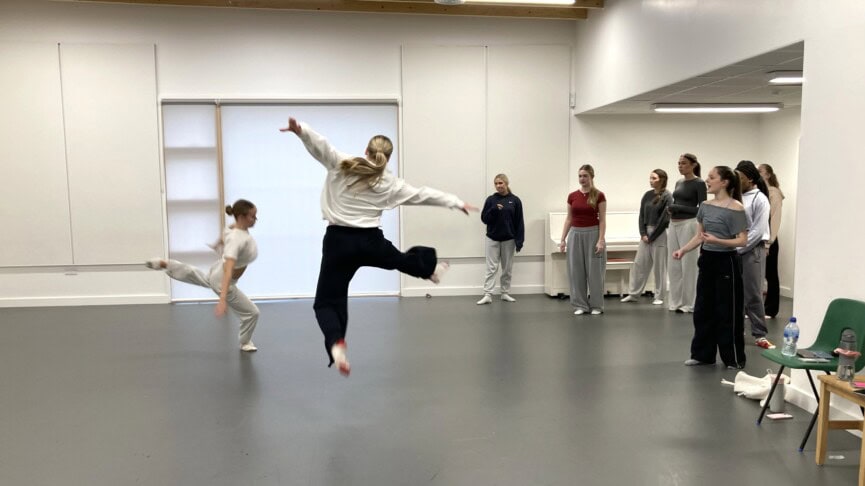
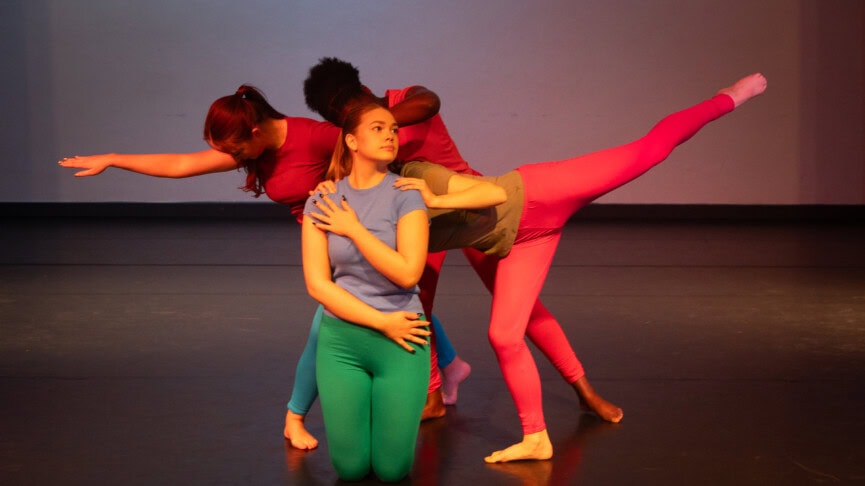
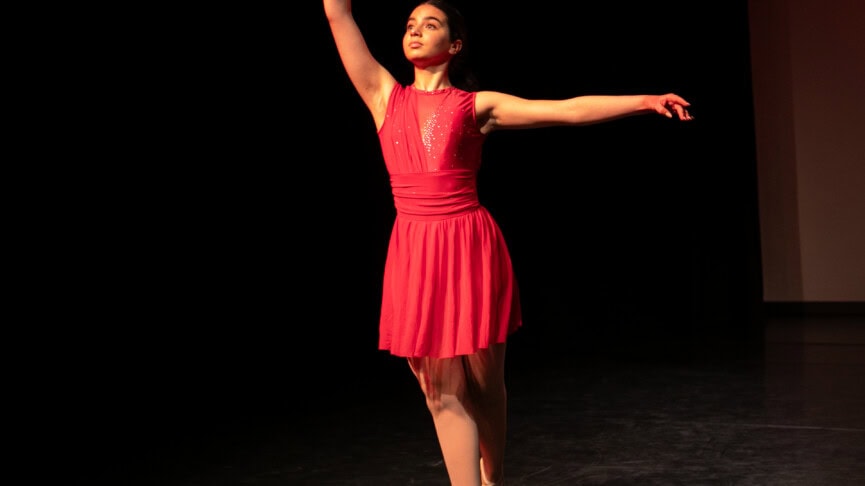
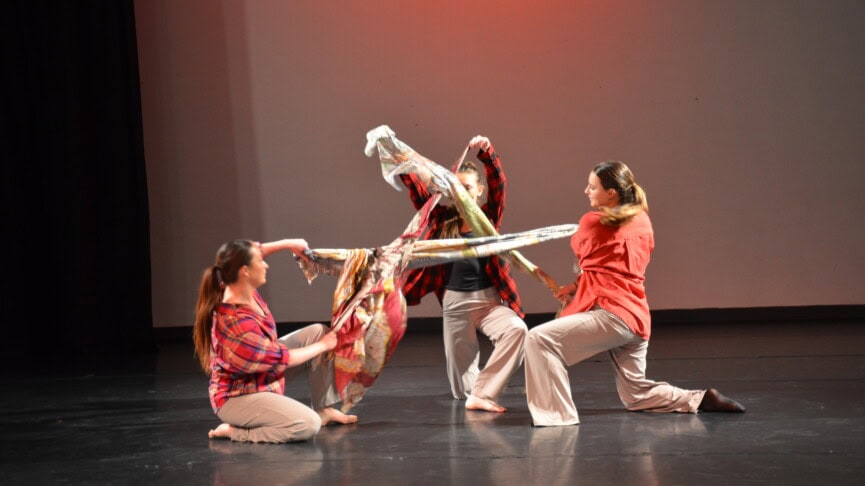
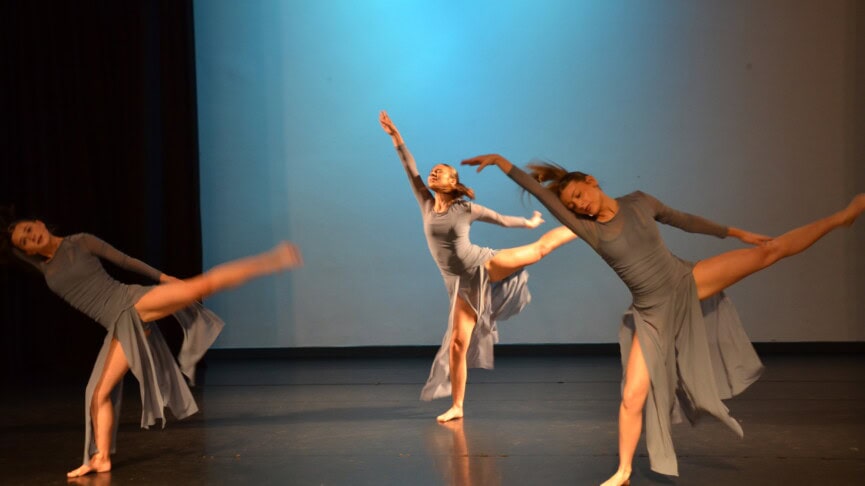
Foundation Diploma in Performing Arts Practice (Dance), equivalent to 1.5 A Levels
Students will study performance, choreography and dance appreciation.
There will be the opportunity to devise, perform and interpret dance, demonstrating technical and expressive skills, as well as evaluate and critique professional works across a range of genres.
Entry Requirements
In addition to the College Entry Requirements, to qualify for this course you will also need to achieve a minimum of:
- Grade 4 in English Language GCSE
- Some formal dance experience is required outside college or at school. This varies from student to student and will be discussed at your course interview and/or enrolment.
Course Details
There are two modules: C and F
In module C, there are there are three units:
- C7 Exploring Performance Styles (61)
You will look at a variety of styles such as Ballet, tap, jazz, modern, street, contemporary, commercial, lyrical, ballroom, Latin, swing, ceremonial and disco/electronic.
You will choose two styles for your assessed performance. These should be contrasting and be created by contrasting choreographers. For each of the two styles you will research a variety of aspects: cultural, social and historical influences; economic and political factors; geographical and physical factors; influence of other practitioners and public and critical responses to the work. You will take part in theoretical sessions and practical workshops to aid your research. You will explore dance skills and techniques appropriate to your chosen styles. You will explore choreographic devices, performance skills and professional skills. You will critically reflect on your work and learn to present to camera. You will create a photo journal of your process including rehearsals and performances. Videos of your performance work will be submitted.All your work will be kept in an online folder. - C8 Creating Performance Material (62)
You will create a final piece of original choreography for a given brief. You will produce a process log accounting for the development of this final project which details the creative and technical processes.
- C9 Performing as a dancer as part of an ensemble (62)
You will produce materials demonstrating engagement within rehearsal sessions and debrief of sessions and a video of a final completed performance showing the result of the development of dance skills and techniques.
In module F there is one unit
- F16 The Performing Arts Industry; My dance career (61 and 62)
You will look at the development of dance through history, the current situation and potential opportunities and threats. You will examine different types of employment opportunities, contracts, being a dancer and a choreographer. You will research professional dancers and choreographers and work with industry professionals to find out about interdependence between the two jobs. You will look at choreographers such as Michel Fokine, Christopher Bruce, Akram Khan, Matthew Bourne, Wayne McGregor, Bob Fosse, Jerome Robbins, Gene Kelly, Fred Astaire and other choreographers in different dance styles and who are working today like McGregor and Christopher Wheeldon. You will be able to make suggestions for choreographers to research.
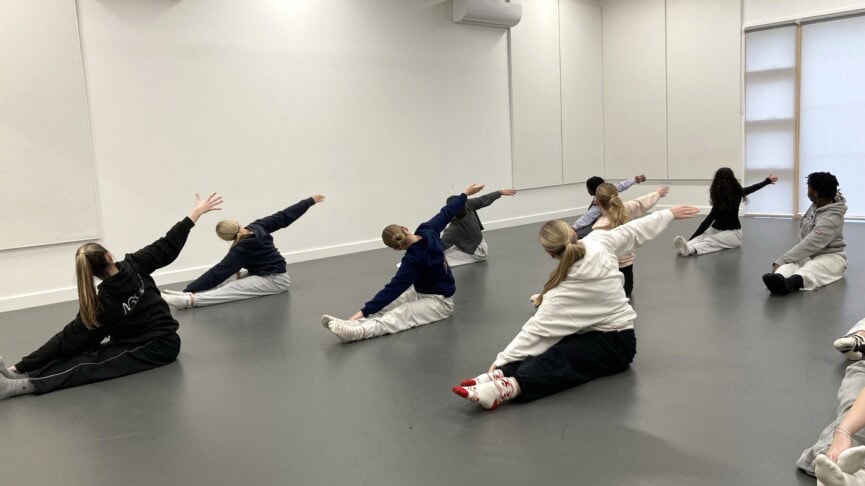
Practical lessons take place in the theatre and the dance studio. We also have a room with desks and laptops for you to use.
Assessment
This vocational course is 100% practical and coursework based. There are no exams, the units are internally assessed which are then externally verified by the exam board.
Subject Combinations
As dance promotes a healthy lifestyle through an awareness of the importance of exercise and training, it combines very well with a Physical Education course. It also complements Music Production and Drama and Theatre and can also be combined with contrasting subjects in the Humanities and Sciences.
Please note students cannot combine the Dance Foundation Diploma with the Performing Arts Practice Foundation Diploma , as these courses are effectively the same qualification but with different pathways.
University Destinations
Dance A Level is a highly respected qualification with 90% of our students progressing onto university.
Here are some typical university destinations that our Dance A Level students go on to. Click on a destination to see some examples of course they have taken.








Rambert School of Ballet and Contemporary Dance
Typical courses: Professional Contemporary Dance; Ballet







Careers
Some students take a Dance degree at a university whilst others go to Urdang, London Studio Centre, Trinity Laban, LIPA, Bird College, Laine Theatre Arts, Arts Ed. or spend a year with a company such as the Balletboyz and gain a Level 4 qualification as a professional dancer. Some go abroad to study Dance at places like the Barcelona Institute of the Arts. Some follow musical theatre pathways and go to places like Mountview or Guildford School of Acting. Careers cover professional dancer, dance critic, dance therapist, administrator for a dance company, archivist and dance teacher.
FAQs
What extra support/enrichment activities are on offer?
The department offers a varied programme of theatre visits. Students have seen work by Akram Khan, the Balletboyz, Shobana Jeyasingh, Javier de Frutos, Richard Alston, and Merce Cunningham’s company, as well as a variety of musical theatre shows such as “Wicked”, “Matilda”, “Guys And Dolls”, “Showboat”, “On the Town”, ‘42nd Street”, “Dreamgirls”, and “An American In Paris”.
Professional dance companies, such as the Rambert Company, come to College and take workshops with students. In the past our students have worked with Rambert at Sadler’s Wells on the main stage, learning repertoire from Christopher Bruce’s “Rooster”, and then continued to attend weekly classes at the new Rambert building on the South Bank in London, culminating in a dance show at The Brits in Croydon and for one lucky dancer who auditioned for the Quicksilver Youth Company at Rambert, a performance at the Queen Elizabeth Hall with the London Philharmonic Orchestra. We have had a residency with Rebourne, Matthew Bourne’s company, and workshops with the Richard Alston company. There is also an annual dance show.
What skills will I need and develop on this course?
You will need some experience in dance. This could be GCSE Dance or classes you attend in school or another dance school. You will enjoy dance and wish to extend your knowledge and understanding of the subject in all areas. There will be an opportunity to develop your creativity and technical knowledge in dance performance, choreography and analytical writing. It is useful but not essential to have experience in ballet and contemporary dance. You will need to be able to appreciate American jazz dance and, in particular, the style of tap.
What is the difference between Performing Arts and Dance?
In Performing Arts you act, sing and dance and do a lot of musical theatre. There is a lot of vocal work. In Dance, you do NOT sing or act. When dancing you might be playing a character so there is a form of acting but it is through mime not through speaking on stage.
Students cannot do both qualifications, instead they must choose either the Performing Arts Practice Foundation Diploma or the Dance Foundation Diploma, as they are effectively the same qualification but with different pathways.