Campaigners Bring Apartheid History to Life
“Apartheid is unique – it’s managed at a microscopic level and infects and festers in every nook and cranny,”
-Lord Peter Hain
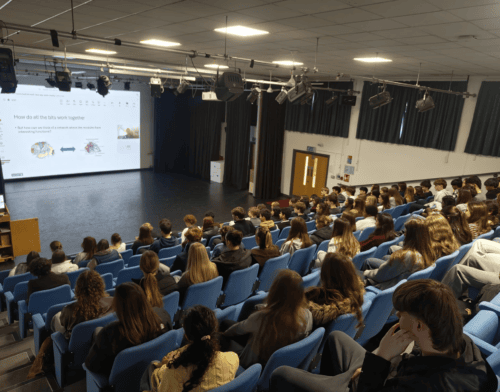
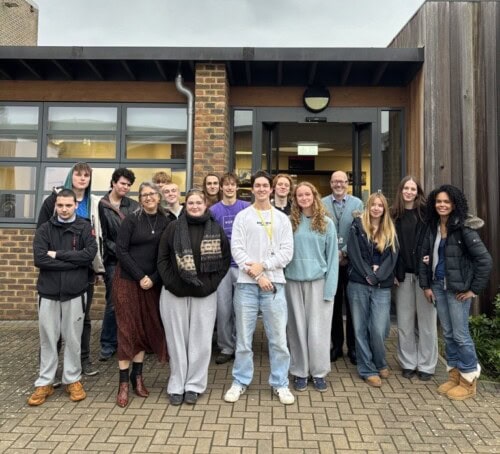
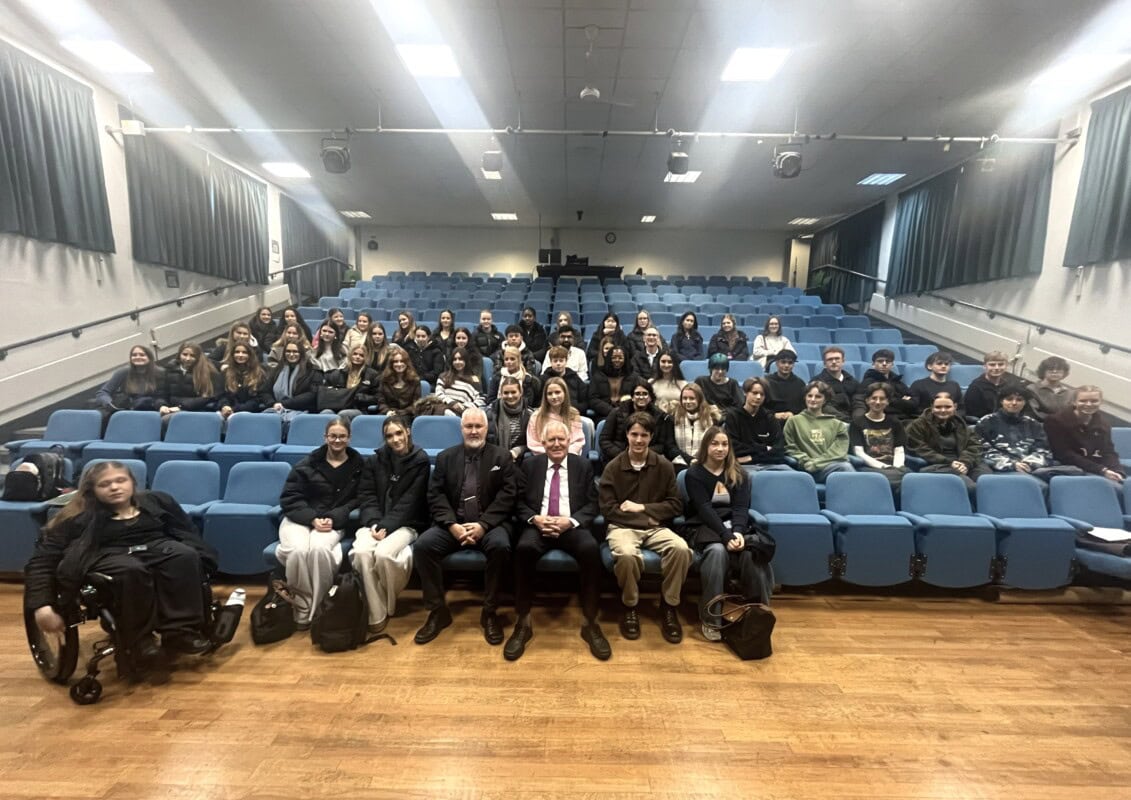
History A Level students were given a powerful first-hand insight into South Africa’s apartheid era during a special talk from two prominent anti-apartheid speakers: Dillon Woods, CEO of the Donald Woods Foundation, and Lord Peter Hain, parliamentarian and long-standing anti-apartheid campaigner. Both speakers were born in South Africa and forced into exile with their families during the 1960s because of their opposition to the apartheid regime.
Dillon Woods shared the story of his family’s resistance to apartheid, focusing on his father, Donald Woods, a white South African liberal journalist and anti-apartheid activist. Donald Woods is best known for his close working relationship with Black Consciousness leader Steve Biko, an alliance that began with mutual suspicion but grew into deep respect and cooperation. Their friendship became a pivotal force in exposing the realities of apartheid and later inspired the film Cry Freedom, starring Denzel Washington and directed by Richard Attenborough.
Woods recounted how his father risked his life to uncover the truth behind Steve Biko’s death in police custody, ensuring it was not dismissed as another unexamined apartheid killing. As a result of this activism, the Woods family was forced to flee South Africa for England when Dillon was just 12 years old, where Donald Woods continued his campaign against the regime.
Woods then introduced Lord Peter Hain, who spoke about his own childhood under apartheid and his family’s forced exile in 1966 due to his parents’ political activism.
“Woods spoke about the harassment he and his family faced, including surveillance, violence and eventually fleeing into exile, which demonstrated the dangers of being connected to those who spoke out, including family. Hain explained how his own family became targets for their activism, explaining how apartheid laws and enforcement controlled everyday life and personal relationships. A key takeaway was that resisting apartheid often came at a huge personal cost, with people sacrificing their safety, careers, family life and, in some cases, their lives.” – History A Level Student William M.
Hain reflected on how these early experiences shaped his lifelong commitment to social justice and political activism. After settling in Britain, Hain became a leading figure in the Anti-Apartheid Movement during the late 1960s, leading campaigns to disrupt all-white South African sports tours, including rugby and cricket. He explained how sport was used deliberately as a global platform to expose and challenge apartheid. Hain described seeing Springboks captain Siya Kolisi lift the Rugby World Cup in 2019 as a moment of profound joy, symbolising the realisation of everything the movement had fought for.
Lord Hain was a serving senior minister in the governments of Tony Blair and Gordon Brown and he played a significant role in the Northern Ireland Peace Process. He is also a published author and currently sits on the Board of Trustees for the Anti-Apartheid Legacy: Centre of Memory and Learning.
The talk concluded with a lively question-and-answer session, giving students the opportunity to engage directly with both speakers. The visit offered a vivid and personal perspective on apartheid, activism, and the enduring importance of challenging injustice.
The College would like to extend their sincere thanks to Dillon Woods and Lord Peter Hain for sharing their time, experiences and insights.